

Master the seowebsitetraffic guide for Growth
Learn how a proven seowebsitetraffic guide boosts organic search. Discover actionable SEO strategies to increase site visitors and improve SERP rankings today.
Table of Contents
- Understanding Organic Search Fundamentals
- Technical Optimization and Site Architecture
- Content Strategy and Keyword Targeting
- Analyzing Performance and Adjusting Tactics
- What People Are Asking
- Comparing Traffic Generation Methods
- Practical Tips for Sustainable Growth
- Final Thoughts on the seowebsitetraffic guide
Article Snapshot
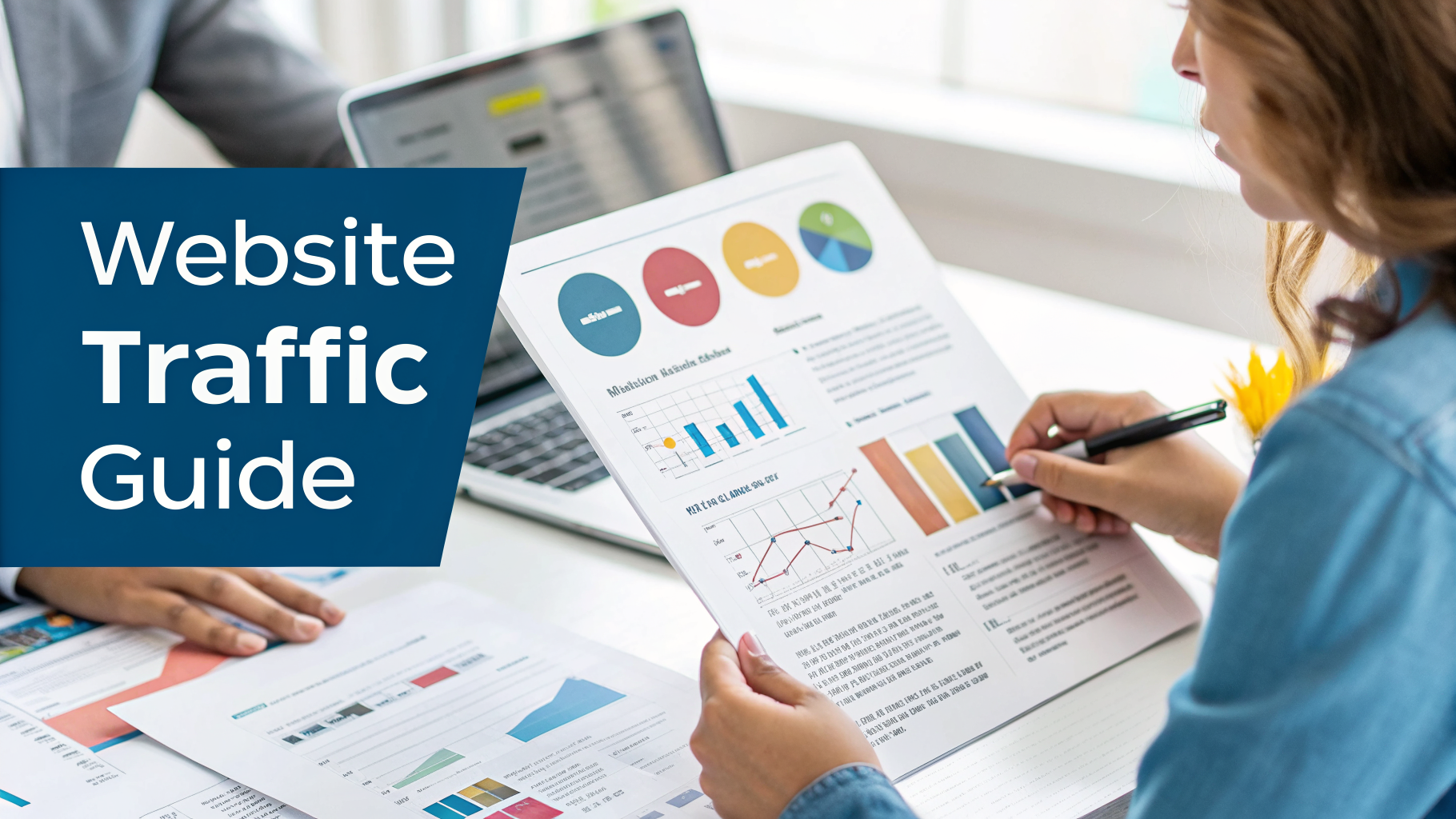
The seowebsitetraffic guide is a structured framework for improving organic search visibility and increasing visitor numbers. This overview covers essential optimization techniques, content strategies, and technical adjustments needed to elevate your search engine rankings and drive sustainable growth for your digital presence.
The seowebsitetraffic guide in Context
- 68 percent of online experiences begin with a search engine (The Breezy Company, 2026)[1].
- Mobile devices account for 59.4 percent of website traffic (The Breezy Company, 2026)[1].
- Click-throughs for Google search result position six average 4.4 clicks (YouTube transcript cited in Search Console discussion, 2026)[2].
The seowebsitetraffic guide strategies form the backbone of any successful digital marketing campaign. When users navigate the web, they rely heavily on search engines to find relevant information, products, and services. Building a robust online presence requires more than just publishing content; it demands a systematic approach to search engine optimization. This comprehensive SEO website traffic tutorial explores the core mechanics of attracting organic visitors. We will examine how search engines crawl and index pages, the importance of mobile optimization, and how to craft compelling meta tags. By understanding these foundational elements, webmasters can significantly improve their SERP rankings. Whether you are managing a small blog or a large e-commerce platform, applying these principles will help you capture valuable search engine traffic and convert casual browsers into loyal customers.
Understanding Organic Search Fundamentals
Mastering the basics of organic search is the first step in any effective site traffic optimization guide. Search engines utilize complex algorithms to evaluate and rank web pages based on relevance and authority. When a user enters a query, the search engine scans its index to deliver the most accurate results. To appear in these results, your website must be easily crawlable and properly indexed.
Crawling involves search engine bots navigating your site architecture to discover new and updated content. If your pages are blocked by robots.txt files or lack internal linking, these bots cannot access your information. Once crawled, the content is indexed, meaning it is stored and organized in a massive database. A well-structured SEO visitor growth guide emphasizes the importance of clear navigation and logical URL structures to facilitate this process.
Furthermore, domain authority plays a critical role in determining where your pages rank. Authority is built over time through high-quality backlink profiles and consistent user engagement. When reputable websites link to your content, search engines interpret this as a vote of confidence. Consequently, your pages are more likely to appear on the first page of search results. Modern search algorithms have evolved beyond simple keyword matching to understand semantic context and user intent. This means your content must comprehensively cover a topic, answering related questions and providing a complete resource. By addressing the broader context of a query, you increase the likelihood of ranking for long-tail keywords, which often yield higher conversion rates.
Technical Optimization and Site Architecture
Technical optimization ensures that your website meets the stringent requirements of modern search engines. A critical component of any search engine traffic guide is improving page speed and ensuring mobile optimization. With mobile devices accounting for a significant portion of web browsing, search engines prioritize mobile-friendly websites in their rankings. If your site loads slowly or displays poorly on smaller screens, users will quickly leave, increasing your bounce rate and signaling poor user experience to search algorithms.
Implementing structured data and optimizing your site architecture are equally vital. Structured data helps search engines understand the context of your content, enabling rich snippets that improve click-through rate. Additionally, a flat site architecture ensures that important pages are only a few clicks away from the homepage, distributing link equity effectively across your domain.
Security is another non-negotiable technical factor. Migrating to HTTPS encrypts data transferred between the user and your server, protecting sensitive information. Search engines explicitly favor secure sites, making SSL certificates a mandatory investment. Core Web Vitals are a specific set of metrics that search engines use to measure user experience. These include loading performance, interactivity, and visual stability. Optimizing these metrics requires minimizing JavaScript execution, deferring non-critical CSS, and ensuring images are properly sized. For a deeper dive into technical requirements, you can consult the official search engine optimization starter documentation to ensure your technical foundation is solid.
Content Strategy and Keyword Targeting
Content remains the primary driver of organic search success. A robust organic web traffic manual prioritizes comprehensive keyword research to identify the terms and phrases your target audience uses. By understanding search intent, you can create content that directly answers user queries. This involves analyzing search volume, competition, and the specific context behind each keyword to ensure your content aligns with what users are actively seeking.
Creating high-quality, engaging content requires more than just inserting keywords into text. It demands a strategic approach to content marketing that provides genuine value. Long-form articles, detailed tutorials, and insightful case studies tend to perform better because they keep users on the page longer, signaling to search engines that the content is valuable. Incorporating relevant alt text for images and optimizing heading tags further enhances the readability and SEO value of your posts.
Internal linking is a powerful tactic to keep visitors engaged and distribute page authority throughout your site. For instance, if you run a niche e-commerce store, you might link from a product page to a related article, such as a cat lover gift guide, to provide additional context and keep the user browsing. This interconnected web of content not only improves user experience but also helps search engine bots discover and index your deeper pages. Consistently publishing valuable content, ideally at a cadence of one post per week (The Breezy Company, 2026)[1], establishes your site as an authoritative resource in your niche.
Analyzing Performance and Adjusting Tactics
Continuous analysis is essential for refining your SEO strategy and maintaining competitive rankings. Utilizing tools like Search Console allows you to monitor how your site performs in search results. You can track impressions, clicks, and average position to identify which pages are driving the most organic search traffic. This data is invaluable for spotting trends and uncovering areas that require immediate attention.
When analyzing performance, pay close attention to pages ranking in positions four through ten. These pages have high improvement potential and often require only minor adjustments to reach the top three spots. For example, a recommended filter threshold used to find keywords with improvement potential is position 6 (YouTube transcript, 2026)[2]. By updating the content, adding new internal links, or improving the meta tags on these specific pages, you can significantly boost their visibility.
Furthermore, tracking conversion rate helps you understand the actual business impact of your traffic. High traffic volumes are useless if visitors are not taking desired actions. Regularly auditing your backlink profile ensures that your site maintains a healthy ratio of high-quality inbound links while disavowing toxic ones. For specialized assistance in scaling your efforts, exploring a dedicated professional traffic generation service can provide advanced insights and tailored strategies. Additionally, integrating your SEO efforts with broader marketing campaigns, such as exploring cat-themed birthday gift suggestions for seasonal promotions, ensures a cohesive approach to audience engagement and sustained digital growth.
What People Are Asking
How long does it take to see results from organic search optimization?
Achieving noticeable results from organic search optimization typically takes between three and six months. Search engines need time to crawl, index, and evaluate your updated content and technical improvements. Factors such as your domain authority, the competitiveness of your target keywords, and the frequency of your content updates all influence this timeline. Consistently applying the principles found in a reliable SEO website traffic tutorial will gradually improve your rankings. Patience and continuous refinement are essential, as search algorithms constantly evolve to prioritize high-quality, user-focused content over quick, manipulative tactics.
What is the difference between regular and one-time visitors?
Understanding your audience is crucial for accurate analytics. A website’s traffic can be accurately logged and is divided into regular visitors and one-time visitors (Seobility Wiki, 2026)[3]. Regular visitors are users who return to your site multiple times, indicating strong brand loyalty and high engagement with your content. One-time visitors arrive, consume a single piece of content, and leave without returning. A successful site traffic optimization guide focuses on converting one-time visitors into regular ones by improving user experience, offering newsletter subscriptions, and providing highly relevant internal links that encourage further exploration of your digital property.
How does mobile optimization impact search engine rankings?
Mobile optimization directly impacts search engine rankings because search engines use mobile-first indexing. This means the mobile version of your website is the primary baseline for evaluating your content and determining your SERP rankings. If your site is not responsive, loads slowly on mobile networks, or features unreadable text, search engines will penalize your rankings. Given that mobile devices account for 59.4 percent of website traffic (The Breezy Company, 2026)[1], ensuring a seamless mobile user experience is non-negotiable. Implementing responsive design, optimizing image sizes, and minimizing code are critical steps to satisfy mobile-first algorithmic requirements.
Can I improve my rankings without building new backlinks?
Yes, you can improve your rankings without building new backlinks by focusing heavily on on-page optimization and technical SEO. Updating outdated content, improving page speed, fixing broken links, and enhancing your internal linking structure can all yield significant ranking improvements. Furthermore, optimizing your meta tags and ensuring your content perfectly matches user search intent can increase your click-through rate, which is a strong positive ranking signal. While a strong backlink profile remains important for domain authority, maximizing the efficiency and relevance of your existing pages is a highly effective strategy outlined in any comprehensive organic web traffic manual.
Comparing Traffic Generation Methods
When developing a digital growth strategy, it is important to understand how different traffic generation methods compare in terms of cost, sustainability, and time to results. While paid advertising offers immediate visibility, organic strategies build long-term equity. The table below contrasts three primary approaches to help you allocate your marketing resources effectively within your broader seowebsitetraffic guide framework.
| Method | Cost Efficiency | Time to Results | Long-Term Sustainability |
|---|---|---|---|
| Organic SEO | High | Slow (3-6 months) | Excellent |
| Paid Search (PPC) | Low | Immediate | Poor (stops when funding stops) |
| Social Media Referral | Medium | Moderate | Good (requires constant engagement) |
Practical Tips for Sustainable Growth
Implementing actionable strategies is crucial for maintaining steady growth in your organic search visibility. First, conduct regular content audits to identify underperforming pages. Refresh these pages with updated statistics, new keywords, and improved multimedia elements to signal relevance to search engines. Second, prioritize user experience by simplifying your navigation menu and ensuring your most important conversion pages are easily accessible from the homepage.
Third, leverage schema markup to enhance your search listings. Adding structured data for articles, products, and reviews can generate rich snippets, which significantly improve your click-through rate on the search engine results page. Fourth, monitor your competitors’ backlink profiles to identify unlinked mentions or guest posting opportunities within your niche.
Finally, ensure your content cadence remains consistent. Publishing one post per week (The Breezy Company, 2026)[1] helps establish a predictable rhythm that both users and search engine crawlers appreciate. By integrating these practical tips into your daily operations, you transform theoretical knowledge from your SEO visitor growth guide into measurable, real-world results that drive continuous digital expansion.
Final Thoughts on the seowebsitetraffic guide
Mastering the principles outlined in a comprehensive seowebsitetraffic guide is essential for any website looking to achieve sustainable digital growth. By focusing on technical optimization, strategic content creation, and continuous performance analysis, you can significantly improve your search engine rankings and attract a highly targeted audience. Remember that search engine optimization is an ongoing process that requires patience, adaptability, and a commitment to providing genuine value to your users. To continue expanding your digital marketing knowledge and discover more actionable strategies for your online presence, explore the extensive resources and expert insights available on freshwaterpearlnecklace.com.
Learn More
- 5 Smart Ways to Skyrocket Your Website Traffic. The Breezy Company.
https://thebreezycompany.co/article/the-ultimate-guide-to-driving-more-website-traffic/ - YouTube transcript cited in Search Console discussion. YouTube.
https://www.youtube.com/watch?v=zoCo1jagjAI - What is Website Traffic? Seobility Wiki.
https://www.seobility.net/en/wiki/Website_Traffic